Carpet Area vs Built-Up vs Super Built-Up Area: What RERA Means for Buyers
Carpet, built-up and super built-up area explained: what RERA counts as carpet area, how loading works, a worked price-per-sq-ft example and what to check in your agreement.
Two flats advertised at "1,200 sq ft" can have very different amounts of usable space. The difference comes down to which area is being quoted. This guide explains carpet area vs built-up area vs super built-up area, what RERA changed, and how to compare prices fairly.
The three areas, in plain terms
| Term | What it includes | Who uses it |
|---|---|---|
| Carpet area | The usable floor inside your flat, including internal walls | The legal basis for selling under RERA |
| Built-up area | Carpet area plus the thickness of the external walls, plus balconies in many older quotes | Older brochures, some resale listings |
| Super built-up area | Built-up area plus your share of common areas: lobby, lifts, staircases, clubhouse, corridors | Older brochures; not accepted for pricing under RERA |
The further down the table you go, the bigger the number, and the less of it you can actually walk on.
What RERA says about carpet area
The Real Estate (Regulation and Development) Act, 2016 defines carpet area in section 2(k) as:
"the net usable floor area of an apartment, excluding the area covered by the external walls, areas under services shafts, exclusive balcony or verandah area and exclusive open terrace area, but includes the area covered by the internal partition walls of the apartment."
In practice that means:
- Included: the floor of every room, kitchen and toilet, plus the area under the internal walls between them
- Excluded: external walls, service shafts, and any balcony, verandah or open terrace that belongs only to your flat
Balconies and terraces are not hidden. Under RERA disclosures and the Maharashtra model agreement for sale, they are listed separately from the carpet area, so you can see exactly what you are getting.
Why this changed how flats are sold
Before RERA, flats were often priced per sq ft of super built-up area. Because the "loading" for common areas varied from project to project, two prices per sq ft could not be compared.
Since RERA, the carpet area of each flat has to be disclosed, and in Maharashtra the MahaRERA model agreement prices the flat on its carpet area, with balconies and terraces shown separately. When you read an agreement, the carpet area is the number that matters.
How big is the "loading"?
Loading is the extra area added on top of carpet area. It varies widely, but as a rough guide:
- Built-up area is typically about 10% to 15% more than carpet area
- Super built-up area is often 25% to 40% more than carpet area, depending on how much common space the project has
These are typical ranges, not rules. A project with a large clubhouse and wide corridors will have a higher loading than a simple building.
A worked example
Say a brochure quotes a flat at 1,200 sq ft super built-up for ₹96 lakh, which is ₹8,000 per sq ft on super built-up area. The real question is what you pay per sq ft of floor you can use.
"30% loading" can mean two different things, which changes the answer:
| If 30% loading means… | Carpet area | Price per sq ft of carpet |
|---|---|---|
| Super built-up = carpet + 30% of carpet | about 923 sq ft | about ₹10,400 |
| Common areas are 30% of super built-up | 840 sq ft | about ₹11,430 |
Either way, the effective rate is well above the ₹8,000 on the brochure. Always ask for the RERA carpet area of the exact unit, and compare projects on price per sq ft of carpet area.
If the final carpet area changes
Flats are measured again after construction. The Maharashtra model agreement for sale allows for a small variation and spells out what happens if the final carpet area differs from the agreed figure:
- if the carpet area is less than agreed, the promoter must refund the excess amount you paid, with interest, within a set period
- if it is more, the promoter can ask for payment for the extra area, but only within a cap of about 3% and at the agreed rate
Check the exact clause in your own agreement before you sign. If it differs from the model agreement, the change should be highlighted.
What to check before you book
- Ask for the RERA carpet area of the exact unit, not the tower average.
- Check the balcony and terrace areas separately, and whether they are open or enclosed.
- Make sure the carpet area in the allotment letter, agreement and MahaRERA registration match.
- Compare projects on total cost per sq ft of carpet area, including parking and other charges.
- Visit a sample flat or a built unit and measure a room or two if you can.
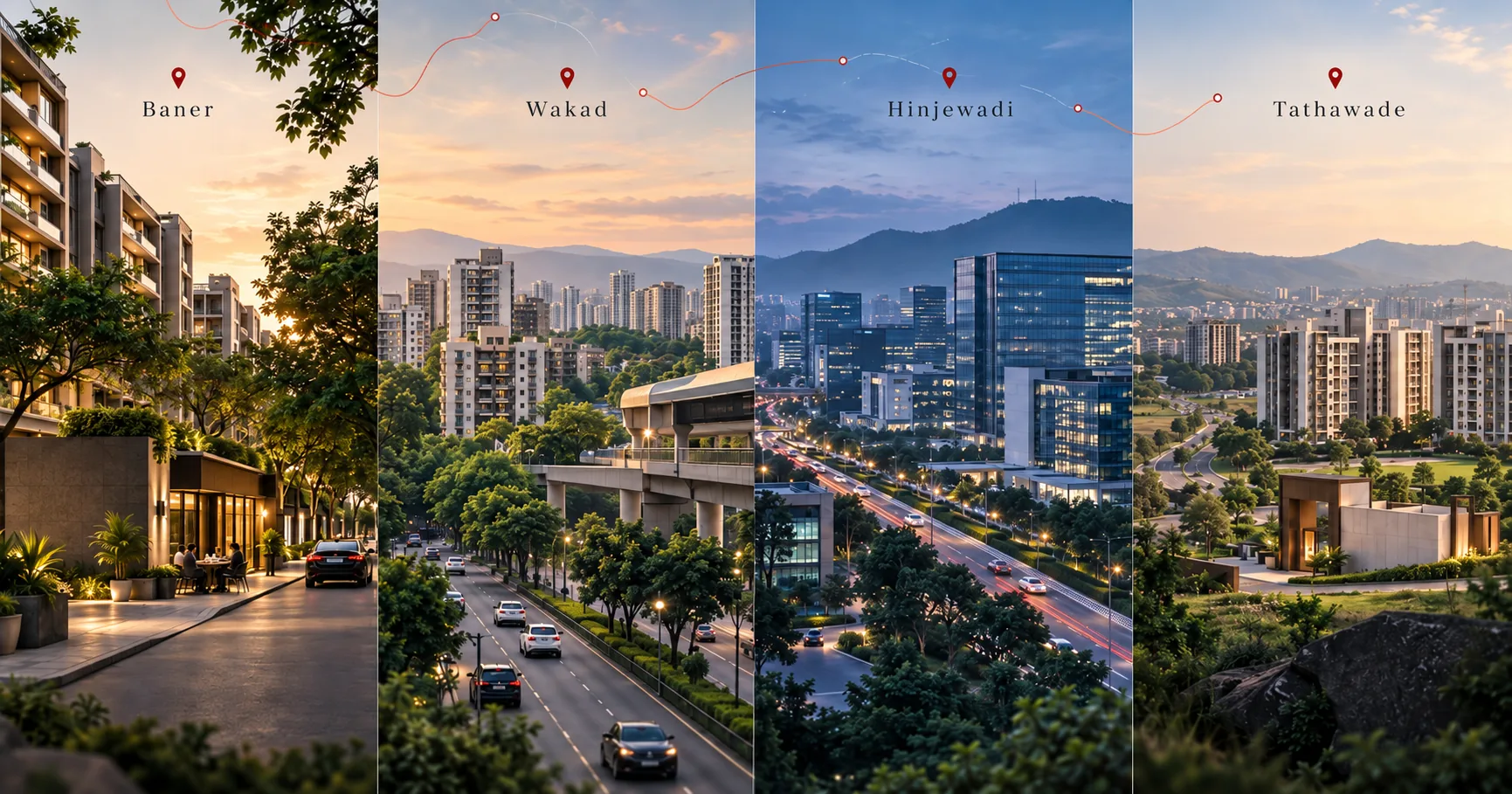
The full cost matters as much as the area. Stamp duty, registration and GST are charged on the agreement value, and our Baner vs Wakad vs Hinjewadi vs Tathawade guide explains why comparing complete cost sheets beats comparing headline rates. You can also check any project's MahaRERA registration on the official portal to confirm the registered details.
The PROPHUNT view
In the carpet area vs built-up debate, remember that a bigger number on a brochure does not mean a bigger home. Ask every developer for the RERA carpet area and the full cost sheet, and do the per-sq-ft maths on carpet area yourself. When you compare 2 BHK flats in Wakad or 3 BHK flats in Baner, that one step makes projects genuinely comparable. If you want help, our advisors can put shortlisted projects side by side for you.
This article is general information, not legal advice. Check your agreement for sale with a property lawyer before you sign.
Frequently asked questions
What is carpet area under RERA?
Section 2(k) of the RERA Act defines carpet area as the net usable floor area of an apartment, excluding external walls, service shafts and exclusive balconies, verandahs and open terraces, but including the area under internal partition walls.
Is the balcony included in carpet area?
No. An exclusive balcony, verandah or open terrace is excluded from carpet area. Under RERA disclosures and the Maharashtra model agreement, these areas are listed separately.
How much bigger is super built-up area than carpet area?
It varies by project. As a rough guide, super built-up area is often 25% to 40% more than carpet area, depending on how much common space the project has.
What happens if the final carpet area is smaller than agreed?
Under the Maharashtra model agreement for sale, the promoter must refund the excess amount paid, with interest. Check the exact clause in your own agreement before signing.